Activating sustainability and systems change by design, we share content designed to support the transformation to a sustainable, circular future.
😮 It’s Earth Overshoot Day again
|
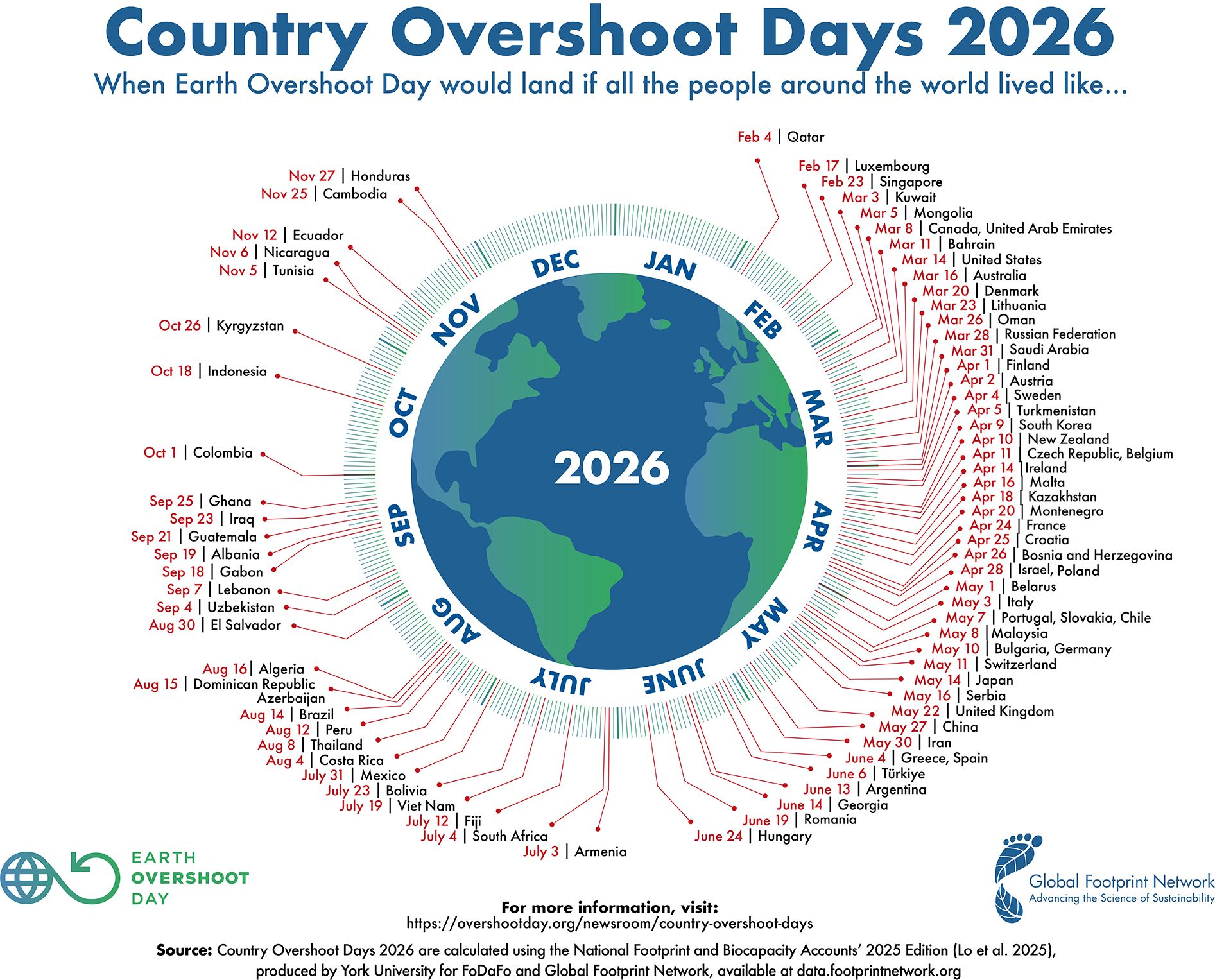
View this email in your browser & share Hey Reader, Every year the Global Footprint Network releases the global Earth Overshoot Day, and this year it’s next week on the 30th July! What does this mean?Humanity’s collective need for resources is inescapable. Since the 1970s, we have been using up more resources than the Earth can replenish. This is mainly because many countries around the world don’t produce all the materials needed to sustain their populations, especially wealthy countries, which then need to import resources from other regions to prop up their economies. This means that we are living in what's called “ecological deficit”, and the entire goal of sustainability is to meet human needs within the ecological carrying capacity of our one Planet Earth. Find your country's overshoot dayEach country around the world has a different overshoot date that shifts each year based on that society's global consumption patterns. During COVID, when supply chains were throttled, many countries experienced delayed overshoot days, as people consumed less and resource extraction was limited by the pandemic. But there has been a year-on-year reduction in the ecological gain as consumption has ramped back up. Use the visual below to find your country's Overshoot Day, and then do your own Ecological Footprint test here to see how many Earths would be required to sustain the planet if everyone lived your lifestyle!
What can you do?None of this is new news. The Global Footprint Network has been doing the number-crunching and developing the Ecological Footprint Methodology (which we have a course on!) since the 90s, and the sustainability community is well aware of the need for a dramatic shift in how we use resources that all must come from and return to Earth. That’s why SDG 12: Sustainable Production and Consumption is so important and why the efforts to introduce the Circular Economy, Sustainable Design and Life Cycle Thinking are so critical. We also developed courses on these topics for professionals to learn how to apply them to their business decision-making. to help people process these complex feelings. Addressing our own individual emotional responses, anxiety and even despair can create the space for divergent thinking and the release of energy for action. Earth Overshoot Day Sale: 50% off everything* until July 30 with code MOVETHEDATE26*Use code movethedate26 for 50% off all UnSchools toolkits, books, courses and learning tracks. 50% valid for the first month of any subscription. Offer valid between 23-30 July 2026.
Each of us can make a difference every day of our lives through the consumption choices we make. It is true that it's the world’s producers who need to make the biggest changes, but we can all support those doing the hard work to make the shifts and reduce our investment in polluting and unsustainable businesses. We collaborated with the United Nations a few years back to create a science-backed campaign on sustainable lifestyles. Check out all the tips here at the Anatomy of Action website. Even though we are living in complex times, one of the most important things is to not give up hope or become apathetic to the challenges. There is always the potential for change, and it takes each of us contributing to that in the micro and macro ways we can. If you need an optimism boost, try our 30-day Action Challenge to get you motivated. Warm wishes from the team at the UnSchool & Circular Futures |
UnSchool of Disruptive Design
Activating sustainability and systems change by design, we share content designed to support the transformation to a sustainable, circular future.